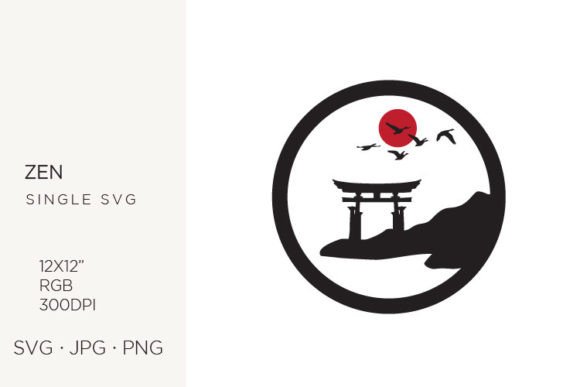
Embracing Serenity: The Significance of the Zen Symbol and Traditional Japanese Gate in Modern Design
In a world that often feels chaotic and fast-paced, there is a profound human desire to bring elements of peace and balance into our daily environments. This search for tranquility has led many designers, artists, and hobbyists to look toward ancient Eastern philosophies for inspiration. Two of the most recognizable and powerful motifs in this realm are the Zen symbol (often represented by the Enso circle) and the traditional Japanese gate, known as the Torii. When these cultural icons are translated into high-quality digital formats, such as SVG artwork, they become versatile tools for creativity, allowing individuals to infuse their projects with deep meaning and aesthetic elegance.
Understanding the roots of these symbols is the first step in using them effectively. It is not merely about copying an image; it is about capturing the spirit behind the design. Whether you are creating a logo for a wellness brand, designing wedding invitations, or crafting handmade home decor, knowing the history and purpose of these elements adds a layer of authenticity to your work.
The Philosophy Behind the Symbols
Before diving into the technical aspects of digital design, it is essential to explore what these symbols actually represent. The Zen symbol, frequently depicted as a hand-painted circle called the Enso, is a sacred symbol in Zen Buddhism. It represents enlightenment, strength, elegance, the universe, and the void. In Zen practice, the circle is drawn in one or two uninhibited brushstrokes to express a moment when the mind is free to let the body create. The imperfection of the line is often celebrated, reminding us that beauty lies in asymmetry and the natural flow of life.
Similarly, the Japanese traditional gate, or Torii, holds significant cultural weight. You will often see these gates marking the entrance to Shinto shrines. Symbolically, the Torii marks the transition from the mundane to the sacred. Passing through a Torii is seen as a form of purification, separating the profane world from the holy ground within. In design, the Torii serves as a powerful metaphor for new beginnings, thresholds, and journeys. It is a structure that invites entry and suggests that something important lies ahead.
Why These Motifs Matter in Contemporary Creativity
You might wonder why ancient religious and cultural symbols are so popular in modern graphic design and crafts. The answer lies in their universal appeal. In today's business and educational landscapes, there is a strong trend toward minimalism and mindfulness. Companies in the health, yoga, meditation, and lifestyle sectors often seek branding that communicates calm and trust. A logo featuring a subtle Enso circle or a stylized Torii gate instantly conveys these values without the need for words.
Furthermore, in the realm of personal expression, people are increasingly looking to decorate their homes with items that reflect their inner values. Wall art featuring these symbols serves as a daily reminder to stay grounded. For educators and content creators, these images can be used to illustrate lessons on geography, religion, art history, or philosophy, making abstract concepts visually accessible to students.
Unlocking Potential with High-Resolution Digital Assets
To truly harness the power of these symbols in your own projects, the quality of the source file is paramount. This is where professional digital graphics elements come into play. Imagine having access to a single, meticulously crafted SVG artwork that combines the fluidity of the Zen symbol with the structural grace of the Japanese gate. However, owning the concept is only half the battle; having the right file formats ensures that your vision translates perfectly across various mediums.
A comprehensive digital package for such a project should ideally include an artboard size of 12x12 inches. This square format is incredibly versatile, fitting perfectly into social media posts, album covers, and standard print layouts. More importantly, the resolution must be crisp. A resolution of 300 DPI (dots per inch) is the industry standard for high-quality printing. Anything less may result in pixelation when the image is enlarged for a poster or a large canvas print.
When selecting digital assets, look for a collection that offers variety in file types to suit different needs:
- SVG File: The Scalable Vector Graphics format is the gold standard for designers. Unlike raster images, SVGs use mathematical paths, meaning you can scale the image up to the size of a billboard or down to the size of a stamp without losing any quality. This is essential for logo design and web graphics.
- JPG File (300 DPI): The Joint Photographic Experts Group format is universally compatible. Having a high-resolution JPG ensures that you can quickly drag and drop the image into documents, presentations, or basic editing software without needing specialized vector tools.
- PNG File (300 DPI with Transparent Background): Perhaps the most crucial for crafters and web designers, the PNG format with transparency allows you to place the Zen symbol and gate overlaying any color or texture. There is no unsightly white box around the image, making it perfect for layering in complex designs.
Practical Applications for Your Creative Projects
Once you have secured these high-quality files, the possibilities for application are nearly endless. Here is how you can integrate these elements into various aspects of modern life and work:
- Logo Design and Branding: If you are launching a boutique, a spa, or a consulting firm, use the SVG file to create a scalable logo. The clean lines of the Torii gate can frame your company name, while the Enso circle can act as a distinctive icon.
- Wall Art and Home Decor: With the 300 DPI JPG or PNG, you can print large-scale canvases for your living room or office. The 12x12 inch artboard can be tiled or centered to create a focal point that promotes a serene atmosphere.
- Handmade Craft Items: For those who enjoy DIY projects, these graphics can be printed on transfer paper for t-shirts, tote bags, or mugs. They can also be used with cutting machines (like Cricut or Silhouette) if the SVG is properly layered, allowing you to create intricate stencils or vinyl decals.
- Stationery and Invitations: Planning a wedding, a baby shower, or a corporate retreat? The elegance of the Japanese gate makes for a stunning invitation card header. The transparent PNG allows you to place the graphic over textured paper backgrounds digitally before printing.
- Web and Graphic Design: Web developers can use the SVG to ensure fast loading times and sharp visuals on all devices, from mobile phones to desktop monitors. It is ideal for website headers, blog post featured images, or digital banners.
- Party Decor and Announcements: From birthday parties to graduation announcements, these symbols add a touch of sophistication. You can print them on cupcake toppers, banners, or thank-you cards.
Clarifying Common Misunderstandings
As you embark on using these cultural symbols, it is important to approach them with respect and understanding. A common misunderstanding is that these images are merely "exotic decorations" without deeper meaning. While they are aesthetically pleasing, treating them solely as trendy patterns can sometimes strip away their cultural significance. By educating yourself on the history of the Zen circle and the Torii gate, you honor the tradition from which they originate.
Another assumption is that digital files are always ready for any use. As mentioned, the difference between 72 DPI (screen resolution) and 300 DPI (print resolution) is critical. Many beginners download low-resolution images from the web, only to find they look blurry when printed. Ensuring your Zip file includes 300 DPI versions guarantees professional results. Additionally, some may assume that SVG files work in every program; however, you typically need vector-based software like Adobe Illustrator, Inkscape, or CorelDRAW to edit the paths within an SVG file, whereas the JPG and PNG are ready for immediate use in almost any image viewer or editor.
Building a Broader Understanding of Digital Art
The intersection of traditional culture and modern technology offers a unique opportunity for learning. By working with these digital elements, you are not just making a pretty picture; you are engaging in a process that bridges centuries of history with contemporary tools. This fusion encourages a broader understanding of how art evolves. It teaches us that while the medium changes—from ink and brush to pixels and vectors—the human desire to express beauty, spirituality, and order remains constant.
Whether you are a seasoned graphic designer looking for fresh inspiration or a beginner eager to start your first crafting project, the combination of the Zen symbol and the Japanese traditional gate provides a rich foundation. It challenges you to think about space, balance, and meaning in your compositions. When you utilize a well-prepared asset pack—complete with SVG, JPG, and PNG files—you equip yourself with the flexibility to experiment across different platforms and materials.
In conclusion, incorporating these timeless symbols into your work is more than a design choice; it is an invitation to bring a sense of calm and intentionality into your creative process. By respecting their origins and utilizing high-quality digital resources, you can create impactful visuals that resonate with audiences on a deep, emotional level. So, unzip that file, explore the layers, and let the serenity of the East inspire your next masterpiece.